
Purpose of the Toolkit – Why focus on Stratigraphic Analysis?
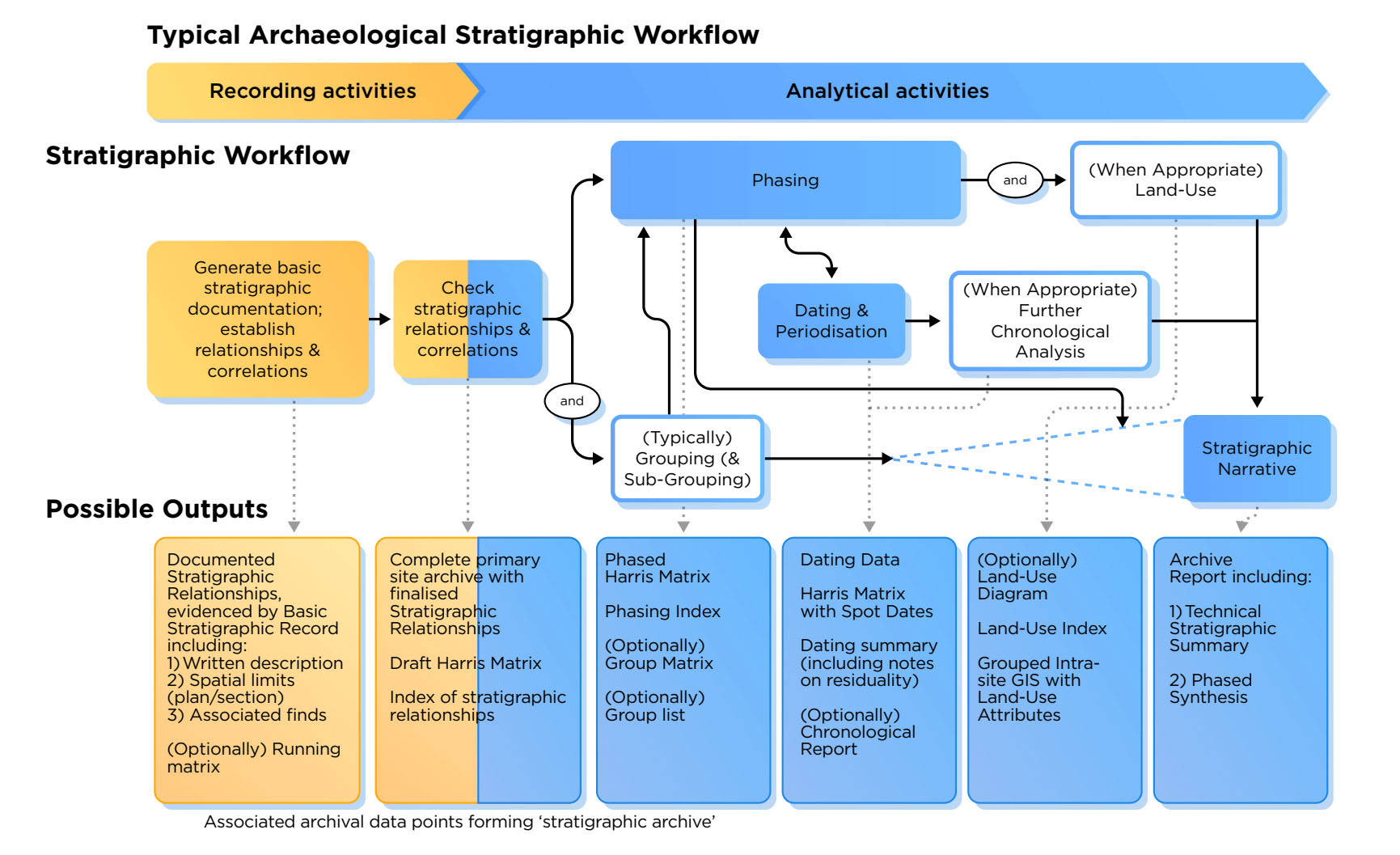
This Toolkit focuses on post-excavation (PX) stratigraphic analysis workflow (Fig. 1) and is intended to reflect the most common current good practice in order to assist archaeologists in carrying out and enhancing their stratigraphic analysis work. It identifies the most common and consistent outputs that derive from post-excavation processes and aims to encourage and promote the consistent production of those outputs and deposition in corresponding archives. As such, this Toolkit provides the basis for a set of minimum digital data packages for stratigraphic analysis data, along with a checklist of the key outputs from PX stratigraphic analysis.
The guidance has been developed collaboratively with the collective expertise of numerous professional archaeologists from the main archaeological contractors in the UK and in consultation with other stakeholders from across the sector. The resulting toolkit is an online resource covering the common processes and methodologies used during stratigraphic analysis post-excavation activities (Fig. 1). Consultation through workshops and focus groups has been undertaken across the sector to develop consistent approaches to using existing stratigraphic principles and recognised standards for stratigraphic analysis, and especially to identify common stratigraphic data and outputs that are required to form part of a consistent and completed digital archive deposition.
The guidance reflects that our analytical tools and systems need to be flexible and adaptable, and yet broadly consistent and digitally sustainable. More consistent digital outputs of stratigraphic analysis should result in better archives and facilitate greater interoperability and reuse of our site and stratigraphic data, to better support different practitioners undertaking analysis and improve the synthesis of archaeological information from different projects. During The Matrix project it was widely acknowledged that there is more than one method of undertaking archaeological stratigraphic analysis, depending upon a range of factors encountered in the archaeology and the scale and nature of the project being worked on. There are therefore a range of good practices reflected in the different circumstances and methodologies outlined in this toolkit which attempts to distill the best practice from each of these different processes and approaches.
There are a considerable number and variety of field recording manuals and academic publications related specifically to the methodology and practice of field recording (for a far from exhaustive list see Resources Bibliograhy section – Examples of Recording Manuals & Recording Documentation). Yet The Matrix project found far more limited literature about the techniques, methods and practice of post-excavation analysis of excavation fieldwork data. It is that gap that this toolkit is intended to fill and why it therefore may appear, rather surprisingly to some people, to start ”somewhere in the middle” of the archaeological process.
Overview Diagram - key steps and outputs in the stratigraphic analysis process
How to use the Toolkit
The toolkit has been divided into a number of sections, identified, during consultation with archaeologists, as the main steps taken during post-excavation stratigraphic analysis.
- Checking Stratigraphic Relationships
- Grouping (subgrouping)
- Phasing
- Dating and Periodization
- Land Use
- Stratigraphic Narrative
These different sections of the toolkit can be browsed from the Menu at the side of this page. These sections cover the main stages in a process known widely as stratigraphic analysis, from firstly consolidating and validating excavation records, through Grouping; Phasing; Dating; Land Use; towards the writing of the Stratigraphic Narrative.
An overview of the main content can be discerned from the diagram (Fig. 1) showing the typical archaeological stratigraphic workflow. This includes a listing of the most typical Outputs from these steps in the process. It is intended that by identifying these Outputs it will aid the clearer sign-posting and ‘Findability’ (FAIRness) of the outputs from this work in resulting publications and archives.
The Resources section (available from the Main Menu) contains a number of separate items that both reflect current practice, and are intended to help the Toolkit user orientate themselves or understand how this toolkit sits within other reference materials.
While this guidance is intended to give a useful summation of the main steps and methods used in this stratigraphic analysis workflow, it cannot cover in detail the multiple forms and permutations of archaeological features and stratigraphy that could be encountered on every possible type of archaeological site. The bibliography has therefore been included to provide references to other relevant documentation.
The Resources section of this toolkit contains a number of separate items that both reflect current practice, and are intended to help the user orientate themselves or understand how this toolkit sits within other reference materials.
While this toolkit is intended to give a useful summation of the main steps and methods used in this stratigraphic analysis workflow, it cannot cover in detail the multiple forms and permutations of archaeological features and stratigraphy that could be encountered on every possible type of archaeological site.
The bibliography has therefore been included to provide references to other relevant documentation. As this project matures and further guidance documents are identified they can be referenced through the Bibliography or added to the Resources sections.
Who is the Toolkit for?
- Archaeologists undertaking PX Stratigraphic Analysis - and related analysis
- PX Managers
- Finds specialists working with stratified assemblages
- Early careers archaeologists without experience of PX
- Students
- Local societies
- CPD
Related CIfA Standards & Guidance
email below from Kate Geary when we were first putting the project together
– pasted in below.
“We would suggest the inclusion of a section that talks about the relevant professional Standards and guidance that organisations will need to be aware of – perhaps as part of the introductory/background sections. A paragraph outlining the role of professional Standards and guidance would sit well here. The toolkit is primarily focused on the generation of data from development-led projects, and as the majority of projects/if not all projects subject to planning are required to meet CIfA Standards and guidance it would be useful to have a section highlighting this". This can then link to the CIfA Toolkits references made elsewhere in the text. CIfA will provide some text for this section on CIfA S&G.
We will link and cross reference with the Dig Digital resources and include links where the toolkit and the Dig Digital Toolkit and some of the other CIfA Toolkits map to each other. There is the potential for some signposting on both sides between some of the Toolkits and this resource which may prove helpful, but especially so with Dig Digital.