
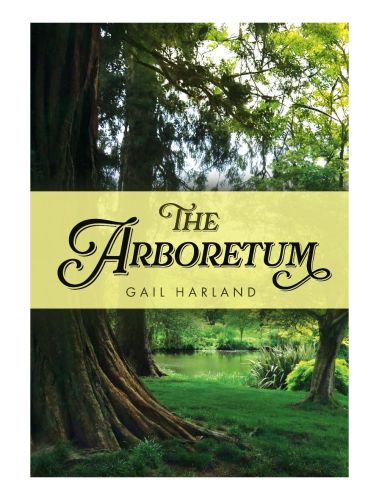
The author has eclectic interests being a paediatric dietitian who writes and lectures on horticulture and wildlife. Her back catalogue includes ‘Foraging for Edible Wild Plants’, ‘Snowdrop’ and ‘Peony’. Her knowledge and enthusiasm for matters botanical comes across clearly in the volume being reviewed.
The Arboretum follows a familiar Amberley format – six short chapters filling a little under a hundred profusely, if rather randomly, illustrated pages. Chapter One – The Love of Trees – provides a brisk canter through human engagement with trees from ancient Egypt and the Near East to modern times by way of Jane Austen.
Chapter 2 – The Sport of Kings – looks more specifically at the history of tree collecting starting with the surprisingly good evidence from Old Kingdom Egypt. As the title suggests, monarchs from Kublai Khan to our current sovereign have an interest in arboriculture (and the means to indulge it on a grand scale).
Chapter 3 – Arboreal Zoos – finally brings us (one third of the way through the book) to arboreta as commonly understood with a discussion of the nurserymen and garden writers of Georgian and Victorian Britain. The role of the Loddiges and John Claudius Loudon in spreading knowledge and developing interest in horticulture in audiences beyond royal and aristocratic circles is well done. Examples discussed include Abney Park Cemetery in Stoke Newington and Derby Arboretum (claimed to be the first urban public park in Britain) - both now on the Register of Historic Parks & Gardens, the latter graded II*.
Chapter 4 – Embellished Landscapes – takes us back in time to the Renaissance and over to the continent as the author considers Trsteno in Croatia and Bomarzo in Italy. Both are examples of landscapes designed for aristocratic clients where the tree collections form only a part of the interest of the garden. The aristocratic gardens of England are of a later date and inevitably we have a nod to Capability Brown. The different approach taken in these landscapes to the ‘arboreal zoos’ of the preceding chapter is characterised by the observation that ‘’Joseph Paxton thought systematic tree collections were incompatible with gardens unless they could be combined with sweeping vistas’ (a concept he put into practice at Chatsworth).
Chapter 5 – The Collector’s Instinct –takes us on a canter through the psychology and ethics of tree collecting. The zeal of Georgian and Victorian plant collectors, and their agents, for gathering seeds and specimens from across the globe is well known. Now perhaps seen as an extension of the colonising mania of western Europeans of that time it attracts a certain opprobrium (which it seems can be assuaged by playing up the value to conservation afforded by the resulting collections).
Chapter 6 - A Green Thing – is a rather haphazard look at current attitudes to trees and their cultural significance, their contribution to wellbeing and use in memorialisation. I suppose that it forms a bookend to the first chapter which takes a more historical than contemporary view.
Within the limits of the format this is a useful introduction to the subject albeit marred by the lack of index or bibliography. The narrative does a lot of looping backwards and forwards which leads to a bit repetition, and one feels that a firmer editorial hand would have been advisable (although unlikely given the price point).