
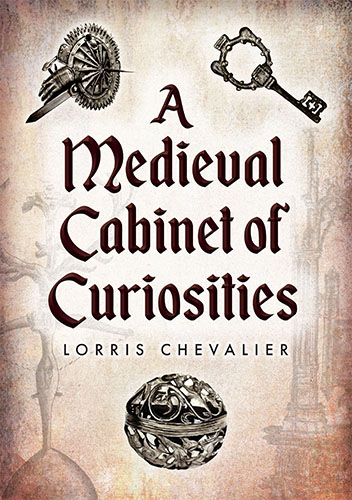
Most archaeologists would agree that beautiful objects alone are not the point of archaeology. What matters is context and the complex relationships between how ordinary things were made, used and moved. Even so there remains something undeniably enjoyable about looking at unique things from the past and listening to the stories they have to tell, and that is the appeal that lies at the heart of A Medieval Cabinet of Curiosities.
Structured around 50 medieval objects, the book combines description, historical background and some interpretive discussion for each item. The institution in which they are housed and their museum numbers are given, allowing further research if interest is sufficiently piqued (although fair warning that some accession numbers are incorrect and references are used inconsistently). Each entry is accompanied by a monochromatic watercolour illustration by Françoise Carpentier, which vary in size and level of detail, focussing predominantly on the texture and feeling of the subject.
The objects featured are diverse, including silver spoons depicting foxes in disguise, glass urinals, a tiny golden bee found in the tomb of a Merovingian king, a ceremonial elk antler shield, alluring pointed shoes, and decorative iron work on doors at Notre Dame, rumoured to have been created by the devil himself. The prose is informative, but generally light in tone and very readable. There is some reliance on playful turns of phrase which occasionally feel overwrought. For example, ice-skating on bone skates is described as a ‘bone-chilling adventure’ in the title of Chapter 15 which goes on to refer to them as ‘primitive’ and constructed from an ‘unexpected’ material, which all seems a little overblown for an everyday accessory made from an extremely common historic material type.
There is a great deal of theology and religious discussion in the book too, presumably reflecting the author’s specialisms and the ubiquitous nature of the Church in medieval Europe. At its most interesting however, Chevalier moves beyond this and explores the symbolism, mythology and folklore that shaped how these objects might have been understood.
Overall, this was a fun book to pick up and flick through, and it is likely to contain things you have not seen before, and some facts you did not know. Chevalier wishes this book to be a ‘temporal travel guide through a fascinating era’ but it does not always provide sufficient depth in its object biographies to fully achieve this. Rather like the cabinet of curiosities it is emulating, its value lies less in completeness and more in the pleasure of using things to tell tales.